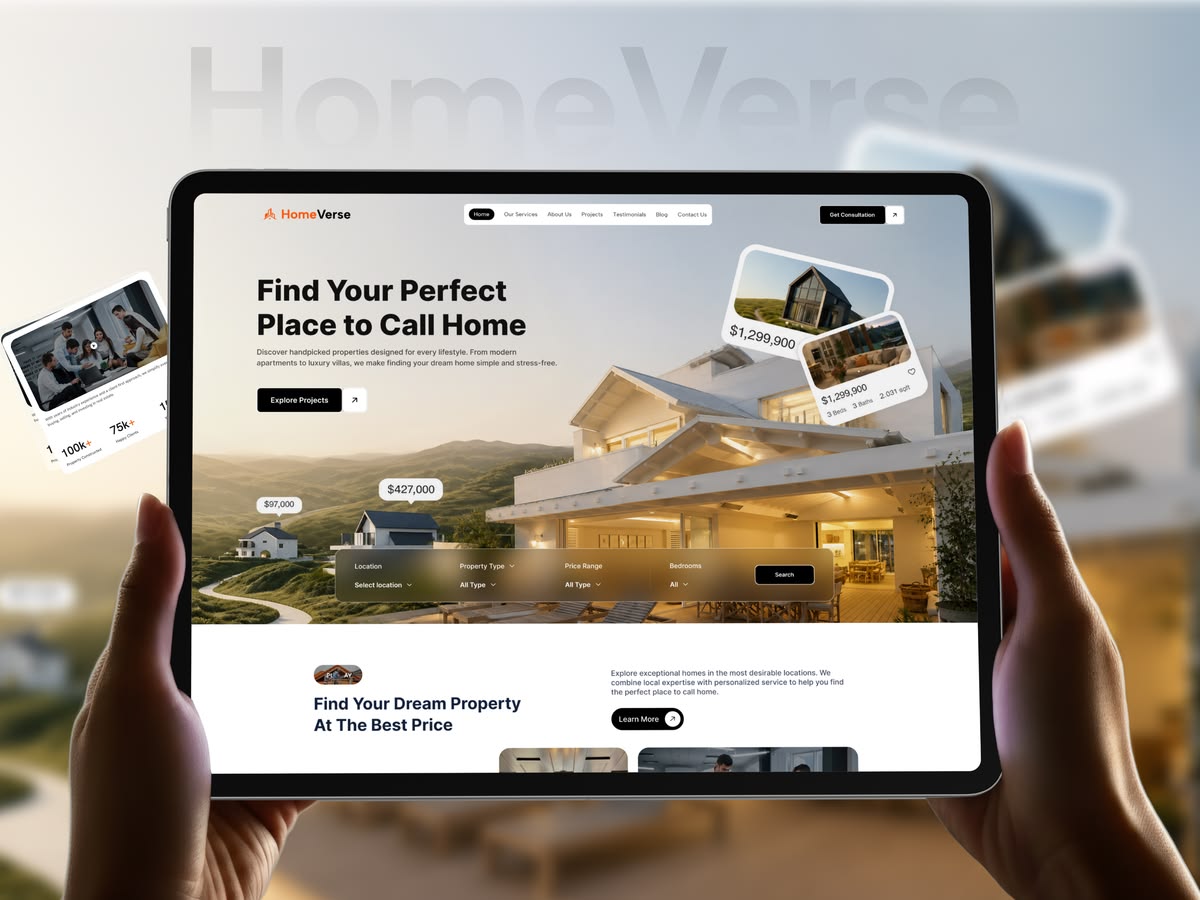
Digital property marketing is entering a more intelligent, measurable and experience-driven era. Advertising can bring potential buyers and investors to a website, but traffic alone does not produce meaningful business growth. Visitors need a focused destination that immediately reflects their interests, answers their most important questions and guides them towards a clear action. This is where professional real estate landing page services become essential.
A specialised landing page is different from a general property website. A corporate website may introduce an agency, display many listings and serve several audience groups at once. A landing page is created for one campaign, one audience and one conversion objective. It connects the promise of an advertisement with a relevant post-click experience, helping property developers, brokers and agencies convert advertising attention into brochure downloads, consultation requests, viewing appointments and qualified enquiries.
Why Real Estate Campaigns Need Dedicated Landing Pages
Property decisions involve substantial financial and emotional considerations. Buyers want to understand the location, developer, unit options, lifestyle benefits, payment structure and investment potential before sharing their details. Sending paid traffic to a general homepage forces visitors to search for this information, introduces unnecessary distractions and often weakens the connection between the advertisement and the offer.
Dedicated real estate landing page services solve this problem by presenting campaign-specific information in a clear sequence. The page can address the needs of a defined segment, such as first-time buyers, international investors, luxury home seekers or people searching for off-plan opportunities. Focused messaging gives visitors confidence that they have reached the right destination and makes the next step easier to understand.
A strong page can support several valuable outcomes:
- Capture enquiries from interested buyers and investors
- Encourage brochure, floor plan or payment plan downloads
- Generate consultation and property-viewing requests
- Improve the relevance of Google Ads and Meta Ads campaigns
- Reduce friction between the advertisement and the sales team
- Provide accurate conversion data for future optimisation
What Professional Real Estate Landing Page Services Include
Effective landing page delivery begins with research rather than visual design. The service provider must understand the property, competitive position, intended audience, traffic source and desired conversion. These insights shape the page structure, value proposition, creative direction and form strategy.
A complete service typically includes audience research, competitor analysis, wireframing, real estate landing page design, persuasive copywriting, responsive development, lead-form creation, analytics configuration and ongoing conversion optimisation. It may also include CRM integration, WhatsApp connectivity, call tracking and automated brochure delivery.
Real Estate Landing Page Design That Guides Decisions
Good design is not simply decoration. It creates a visual hierarchy that helps visitors process complex property information without feeling overwhelmed. The opening section should communicate the core offer immediately through a relevant headline, supporting message, high-quality visual and prominent call to action.
The remaining sections should follow a natural decision-making sequence. Project highlights can establish relevance, while location benefits, amenities, floor plans and developer credentials provide greater detail. Testimonials, licences, awards and proven results add trust before the final enquiry prompt. Important actions should remain visible without making the experience aggressive or repetitive.
Modern real estate landing page design must also reflect the positioning of the property. A luxury waterfront development requires a different visual language from an affordable family community or commercial investment opportunity. Typography, colour, imagery, spacing and copy should reinforce the character of the project while maintaining clarity and usability.
Building High-Converting Real Estate Landing Pages
High-converting real estate landing pages remove uncertainty and make action feel simple. They use a clear value proposition, benefit-led content, credible information and a focused call to action. Instead of presenting every available service or listing, they concentrate on the details that matter to the targeted visitor.
Name, phone number, email address, budget and preferred unit type may be appropriate, depending on the campaign. A shorter form can increase submission volume, while additional questions may help the sales team prioritise prospects. The correct balance should be determined through testing rather than assumption.
PPC Landing Pages for Real Estate Campaigns
PPC landing pages for real estate must maintain a strong connection between the advertisement, search intent and page content. If an advertisement promotes waterfront apartments in a specific community, the landing page should repeat that promise immediately rather than introduce unrelated properties. This message alignment can improve user confidence, engagement and advertising relevance.
Campaign-specific pages also produce cleaner performance data. Marketing teams can compare traffic sources, audiences, keywords, creative concepts and offers using form submissions, calls, brochure downloads and WhatsApp interactions. This allows budgets to be directed towards combinations that generate genuine sales opportunities rather than superficial clicks.
Real Estate Lead Generation Landing Pages and Sales Integration
Real estate lead generation landing pages should connect seamlessly with the systems used by sales teams. A form submission is only valuable when it reaches the right adviser quickly, includes useful context and receives an appropriate follow-up.
CRM integration can automatically record the campaign source, property interest, contact details and qualification responses. Leads can then be assigned according to project, location, language or availability. Email automation can confirm the enquiry and deliver requested materials, while WhatsApp integration can make immediate communication convenient for mobile users.
Tracking should measure more than the final form. Phone calls, button clicks, brochure downloads, form starts and completed submissions reveal how visitors interact with the page. Google Analytics 4, Google Tag Manager, advertising pixels and call-tracking tools can provide a more complete view of the conversion journey. Accurate attribution helps decision-makers evaluate cost per lead, lead quality and return on advertising spend.
Mobile Performance, Speed and Technical Quality
Many property searches begin on mobile devices, especially when users discover projects through social advertisements. A mobile-first page therefore needs readable text, responsive images, simple forms and buttons that are easy to tap. Sticky contact options can keep the next action accessible as visitors explore the offer.
Page speed is equally important. Oversized project renders, heavy videos and unnecessary scripts can delay the experience and increase abandonment. Image compression, modern formats, lazy loading, efficient code and reliable hosting help the page load quickly without reducing visual quality. Secure forms, SSL protection, privacy notices and consent controls also strengthen confidence and support responsible data collection.
The Future of Property Landing Page Development
The next generation of property landing page development will be increasingly personalised and data-aware. Instead of showing identical content to every visitor, advanced pages can adapt headlines, imagery, property recommendations and calls to action according to location, campaign source, language or demonstrated interest.
Artificial intelligence can help analyse behaviour patterns, identify conversion barriers and recommend new content variations. Predictive lead scoring can help sales teams recognise prospects with stronger purchase intent, while automated workflows can deliver relevant follow-up based on the property, budget or preferred communication channel. Interactive floor plans, virtual tours and conversational assistants can make remote exploration more useful for international buyers.
However, technology should support human decision-making rather than replace it. Personalisation must remain accurate, transparent and respectful of privacy. The strongest future-ready pages will combine automation with credible market knowledge, clear communication and access to experienced property advisers.
Continuous experimentation will also become essential. A/B testing can compare headlines, images, form length, proof elements and CTA language. Heatmaps and session analysis can reveal where visitors hesitate or leave. These insights allow teams to improve the experience over time instead of treating the initial launch as a finished product.
Choosing the Right Real Estate Landing Page Partner
The right partner should understand both digital conversion principles and the realities of property marketing. A general web designer may create an attractive page, but a specialist considers advertising intent, buyer psychology, project information, lead qualification and sales integration together.
Before selecting a provider, review its process, real estate experience, technical capabilities and approach to measurement. Ask whether the service includes research, copywriting, mobile development, analytics, CRM integration, quality testing and post-launch optimisation. Case studies should demonstrate meaningful outcomes such as improved conversion rates, qualified lead growth or reduced acquisition costs rather than focusing only on appearance.
Conclusion
Professional real estate landing page services connect creative presentation with performance marketing and sales execution. They provide focused experiences that help buyers understand an opportunity, trust the brand and take the next step with confidence.
Success depends on more than an elegant design. It requires relevant messaging, responsive development, persuasive property content, fast performance, reliable tracking and continuous optimisation. When supported by CRM connectivity, intelligent personalisation and timely human follow-up, a landing page can become one of the most productive assets in a real estate marketing strategy.
For property developers, brokers and agencies planning future campaigns, investing in a specialised landing page system creates a stronger foundation for qualified enquiries and sustainable growth. Build every page around the audience, measure what matters and improve the experience continuously to turn advertising attention into valuable property conversations in a competitive property market.





Leave a Comment
Share your thoughts on this article