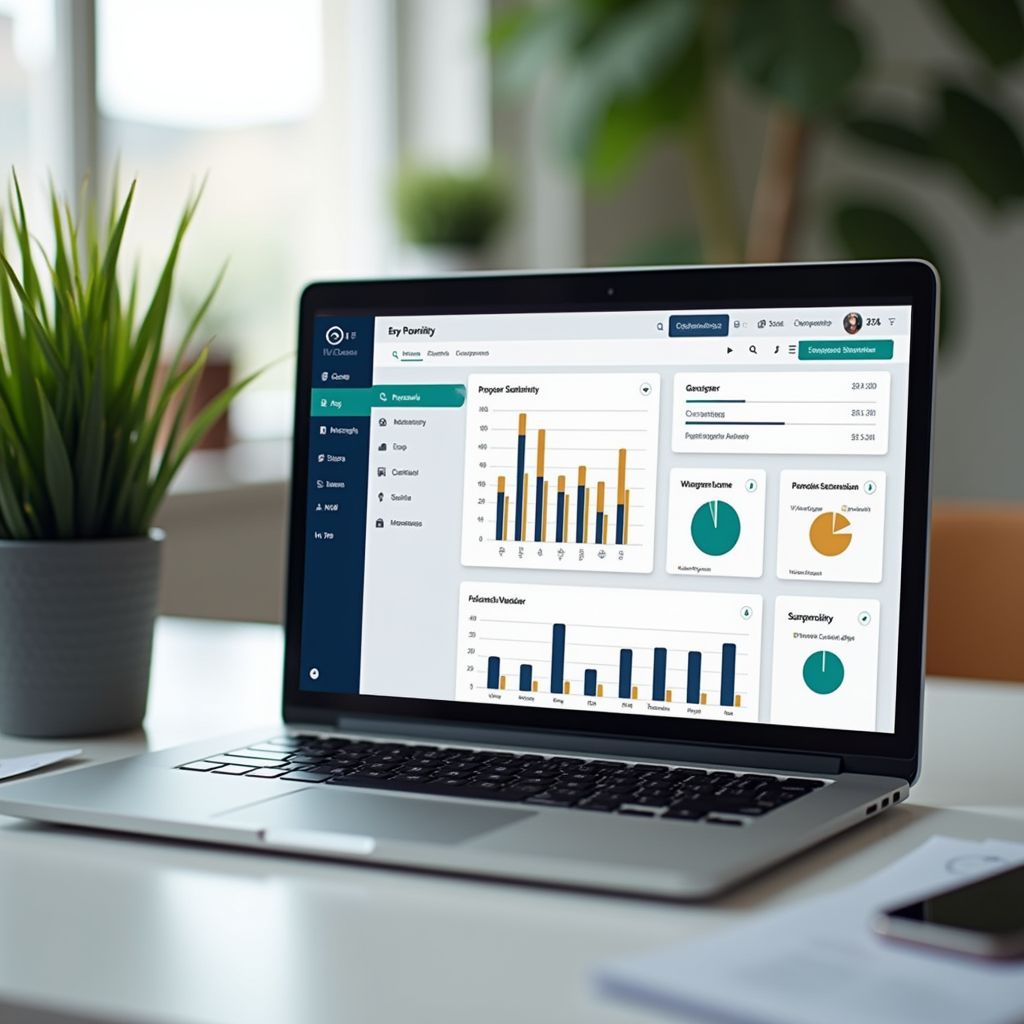
Property portfolio management software is becoming essential for real estate companies, investors, asset managers, developers, family offices and commercial property operators that manage multiple assets. As portfolios grow, spreadsheets and disconnected tools make financial and operational tracking harder.
Modern platforms bring operational, financial and investment data into one centralised environment. Decision-makers can analyse the entire portfolio, compare asset performance and identify opportunities or risks faster. Property portfolio management software is moving beyond record keeping. Artificial intelligence, predictive analytics, automated forecasting and scenario modelling are rapidly transforming these platforms into intelligent decision systems.
What Is Property Portfolio Management Software?
Property portfolio management software is a digital system designed to manage, monitor and analyse multiple real estate assets from one platform. It connects property-level information with portfolio-level insights so managers can understand how every asset contributes to overall performance.
A strong platform combines capabilities found in real estate portfolio management software, property asset management software and financial reporting tools. This creates a single source of truth across teams.
Typical portfolio data includes:
- Property and unit information
- Ownership and acquisition details
- Rental income and operating expenses
- Lease terms and expiry dates
- Occupancy and vacancy levels
- Property valuations
- Net operating income
- Capital expenditure
- Debt information
- Investment returns and forecasts
- Portfolio risks and opportunities
Property Management vs Property Portfolio Management
Traditional property management software focuses mainly on daily operations such as rent collection, tenant communication, lease administration and maintenance. Property portfolio management software operates at a more strategic level.
It helps businesses answer questions such as:
- Which properties generate the strongest returns?
- Where is vacancy reducing income?
- Which assets have rising operating costs?
- Should a property be held, refinanced, improved or sold?
- How should capital be allocated?
- How might the portfolio perform under different scenarios?
This makes the technology valuable to strategic real estate teams.
Centralised Real Estate Portfolio Management
One major benefit of real estate portfolio management software is centralisation. Growing portfolios contain data across properties, tenants, contracts, financial records and investment documents.
A centralised system can show:
- Total portfolio value
- Number of properties and units
- Asset classes and locations
- Current occupancy
- Rental income
- Operating expenses
- Portfolio cash flow
- Upcoming lease expiries
- Property profitability
- Portfolio performance
Instead of moving between spreadsheets and separate accounting tools, managers work from one consistent data environment.
Financial Performance and Portfolio KPIs
Effective portfolio management depends on accurate financial measurement. Modern software should calculate the metrics used to evaluate investment quality and asset performance.
Important KPIs include:
- Net Operating Income (NOI)
- Return on Investment (ROI)
- Internal Rate of Return (IRR)
- Cash-on-Cash Return
- Gross and net rental yield
- Capitalisation rate
- Equity multiple
- Occupancy and vacancy rates
- Operating expense ratio
- Debt Service Coverage Ratio
- Loan-to-Value ratio
- Capital appreciation
- Budget variance
A property portfolio tracking system that monitors these metrics continuously gives management a clearer view of where value is being created or lost. Two properties may generate similar income, for example, while one carries much higher financing, maintenance or vacancy costs.
Property Asset Management Software for Strategic Decisions
Property asset management software helps companies manage the entire lifecycle of an asset rather than focusing only on tenants and leases.
Asset managers can monitor acquisition value, current valuation, operating performance, capital improvements and potential exit strategies. This supports an individual business plan for each property.
Strategic asset management may include:
- Revenue optimisation
- Cost reduction
- Property repositioning
- Renovation planning
- Capital expenditure management
- Lease strategy
- Refinancing
- Hold-versus-sell analysis
- Disposal planning
When these strategies are measured at portfolio level, management can prioritise assets with the strongest future potential.
Investment Management and Portfolio Returns
Real estate investment management software connects property performance with investment objectives. Investors need to know not only what an asset produces today, but how it may perform throughout the holding period.
Software can model initial investment, recurring cash flows, financing, future property value and expected exit proceeds. Teams can compare:
- Actual versus target returns
- Levered and unlevered IRR
- Expected and realised ROI
- Asset-level versus portfolio-level returns
- Historical and projected cash flow
- Capital appreciation
- Risk-adjusted performance
These insights are especially useful for investment firms, family offices and funds.
Forecasting and Scenario Modelling
Historical reports explain what happened. Forecasting helps decision-makers understand what may happen next.
Modern systems can model changes in:
- Rental growth
- Vacancy
- Operating expenses
- Interest rates
- Property values
- Capital expenditure
- Debt payments
- Lease renewals
Scenario modelling allows teams to create base-case, best-case and downside projections. Managers can test what happens if vacancy increases, rental growth slows or refinancing becomes more expensive. This turns property portfolio management software into a strategic planning platform rather than a static reporting tool.
Lease Intelligence and Rent Roll Management
Lease data directly affects future portfolio income. A strong system should provide detailed lease intelligence and rent roll analysis.
Managers can track:
- Lease commencement and expiry
- Monthly and annual rent
- Rent escalation clauses
- Renewal options
- Break clauses
- Security deposits
- Upcoming vacancies
- Contract amendments
Advanced platforms may also use AI-powered lease abstraction to extract critical information from contracts automatically. For commercial property portfolio management software, this is particularly valuable because commercial leases can contain complex clauses, escalations and long contract periods.
Capital Expenditure and Debt Management
Portfolio performance is strongly influenced by capital expenditure and financing. CapEx tools can track renovations, equipment replacement, upgrades and major improvement projects while comparing planned expenditure with actual cost.
Debt management can monitor:
- Outstanding loan balance
- Interest rates
- Loan maturity dates
- Debt service
- Loan-to-value
- Refinancing requirements
- Fixed and variable debt
- Portfolio leverage
Combining debt, CapEx and asset performance creates a more realistic picture of portfolio health.
Portfolio Risk Management
Every property portfolio carries risk. Good software makes exposure more visible and measurable.
Important risks include:
- Vacancy risk
- Tenant default risk
- Market risk
- Interest-rate risk
- Refinancing risk
- Concentration risk
- Liquidity risk
- Compliance risk
Portfolio dashboards can highlight assets with falling NOI, rising expenses, upcoming debt maturities or high tenant concentration. Early visibility allows managers to act before small issues become larger financial problems.
AI and Predictive Portfolio Intelligence
Artificial intelligence is shaping the future of real estate technology. The next generation of property portfolio management software will increasingly act as an intelligent assistant for asset and investment teams.
AI can support:
- Predictive vacancy analysis
- Rental income forecasting
- Expense anomaly detection
- Predictive maintenance
- Lease document extraction
- Portfolio risk scoring
- Investment opportunity ranking
- Natural-language portfolio queries
- Automated executive reporting
Instead of manually searching dashboards, a manager may ask which assets are most likely to underperform and receive an evidence-based answer generated from portfolio data.
Integrations, Data Governance and Security
A modern platform should connect with CRM platforms, ERP systems, accounting software, banking tools, payment gateways, business intelligence platforms and document storage systems. APIs and data synchronisation reduce duplicate work and keep information consistent.
Enterprise-grade security should include:
- Role-based permissions
- Multi-factor authentication
- Data encryption
- Audit trails
- Automated backups
- Access controls
- Change history
Strong data governance improves accuracy while protecting sensitive financial, tenant and investment information.
Who Needs Property Portfolio Management Software?
The technology is valuable for organisations managing multiple assets or requiring deeper investment visibility.
Common users include:
- Property owners
- Real estate investors
- Asset managers
- Portfolio managers
- Property management companies
- Commercial property operators
- REITs
- Family offices
- Real estate funds
- Private equity firms
- Developers
- Institutional investors
How to Choose the Right Platform
The right platform should match portfolio scale, asset type and strategic goals. Before selecting software, evaluate:
- Portfolio size and complexity
- Supported property types
- Financial reporting depth
- Portfolio analytics
- Forecasting capabilities
- Lease management
- CapEx and debt tracking
- AI capabilities
- Integration options
- Data migration
- Security
- Scalability
Businesses should not choose software simply because it has more features. The better question is whether the platform improves decisions, reduces manual work and creates a dependable view of performance.
The Future of Property Portfolio Management
The future of portfolio management will be predictive, automated and connected. Software will move from storing information to actively recommending actions.
Real-time data will combine with AI, machine learning and advanced forecasting to detect performance changes earlier. Digital workflows will connect real estate teams in one ecosystem.
A sophisticated property portfolio tracking system may evaluate thousands of variables to recommend whether an asset should be improved, refinanced, repositioned or sold. Technology will therefore become part of investment strategy, not merely operational support.
Conclusion
Property portfolio management software gives real estate businesses a structured way to manage assets, finances, leases, risk and investment performance from one central platform. By combining the strengths of real estate portfolio management software, property asset management software and real estate investment management software, modern systems provide a clearer understanding of how individual properties contribute to overall portfolio value.
The strongest platforms go beyond basic tracking. They connect NOI, IRR, ROI, cash flow, CapEx, debt, lease intelligence, benchmarking and scenario modelling with automation and AI-powered insights.





Leave a Comment
Share your thoughts on this article